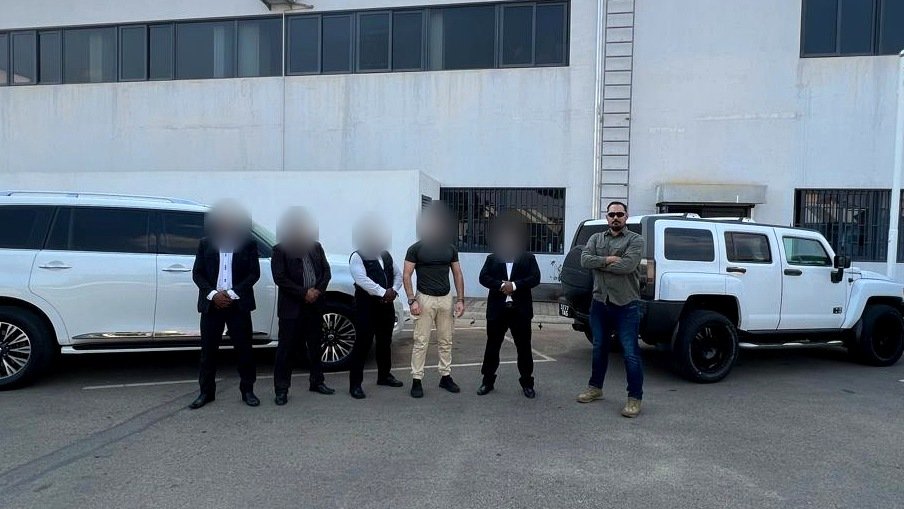
Four Years of Security Leadership Across Gold Refining, Remote Mining Operations, Crisis Management and Workforce Protection
Building and leading an integrated security, safety and crisis-management capability for a vertically integrated mining organisation operating across Antananarivo and the remote Mananjary region.
Read Case Study All Case Studies
Between 2021 and 2024, Nikolaos E. Chatzovoulos served as Director of Security & Crisis Management for an international mining organisation operating in Madagascar.
Joining the project from its earliest stages, his responsibility extended beyond the management of an existing security function. The requirement was to build the security architecture alongside the organisation itself, supporting the development of both an urban gold-refining capability in Antananarivo and a large remote mining operation in the Mananjary region.
The organisation operated across the full value chain, from extraction and processing through transportation, refining and commercial activity. The operating environment combined high-value commodities, remote infrastructure, a workforce of approximately 1,000 people, significant community interaction, difficult logistics, limited access to advanced medical care and exposure to criminal, environmental and operational risks.
Approximately 150 personnel operated within the security function. The security structure incorporated guard-force management, vehicle and mobility capabilities, surveillance technology, thermal imaging, sensors and unmanned aerial systems, while integrating closely with Health & Safety, on-site medical support and emergency preparedness.
Formal liaison and operational cooperation were also established with Madagascar's Police and Gendarmerie to support the protection of personnel, facilities and operations.
Responsibilities extended across mining and refining facilities, executive and visitor protection, journey management, high-value movements, cash-related operations, investigations, access control, incident reporting, emergency procedures and crisis management.
The gold-refining operation established in Antananarivo subsequently undertook projects for the Central Bank of Madagascar, reflecting the operational maturity and institutional confidence achieved by the organisation.
Over four years, the security function had to respond not only to theft, sabotage and criminal threats, but also to medical emergencies, remote-area challenges and major natural hazards. These included Cyclone Batsirai, during which the organisation protected its personnel without loss of life and restored operational activity rapidly despite severe disruption across the surrounding region.
The organisation's activities in Madagascar combined an urban gold-refining operation in Antananarivo with a large, remote mining project in the Mananjary region.
The mining operation extended across approximately 25 square kilometres and supported a workforce of around 1,000 personnel. The business operated vertically across the value chain, encompassing extraction, processing, transportation, refining and commercial activity.
This created a security environment significantly more complex than the protection of a single industrial facility. Responsibilities extended across remote mining areas, operational compounds, industrial infrastructure, gold-related activities, vehicle movements, personnel accommodation, executive visits and the organisation's facilities in Antananarivo.
The wider operating environment also involved substantial interaction with local communities. Approximately 11,000 local residents lived within the broader operational area, requiring security planning to take into account not only conventional physical threats but also community relations, access, movement and the continuous coexistence of industrial activity with the surrounding population.
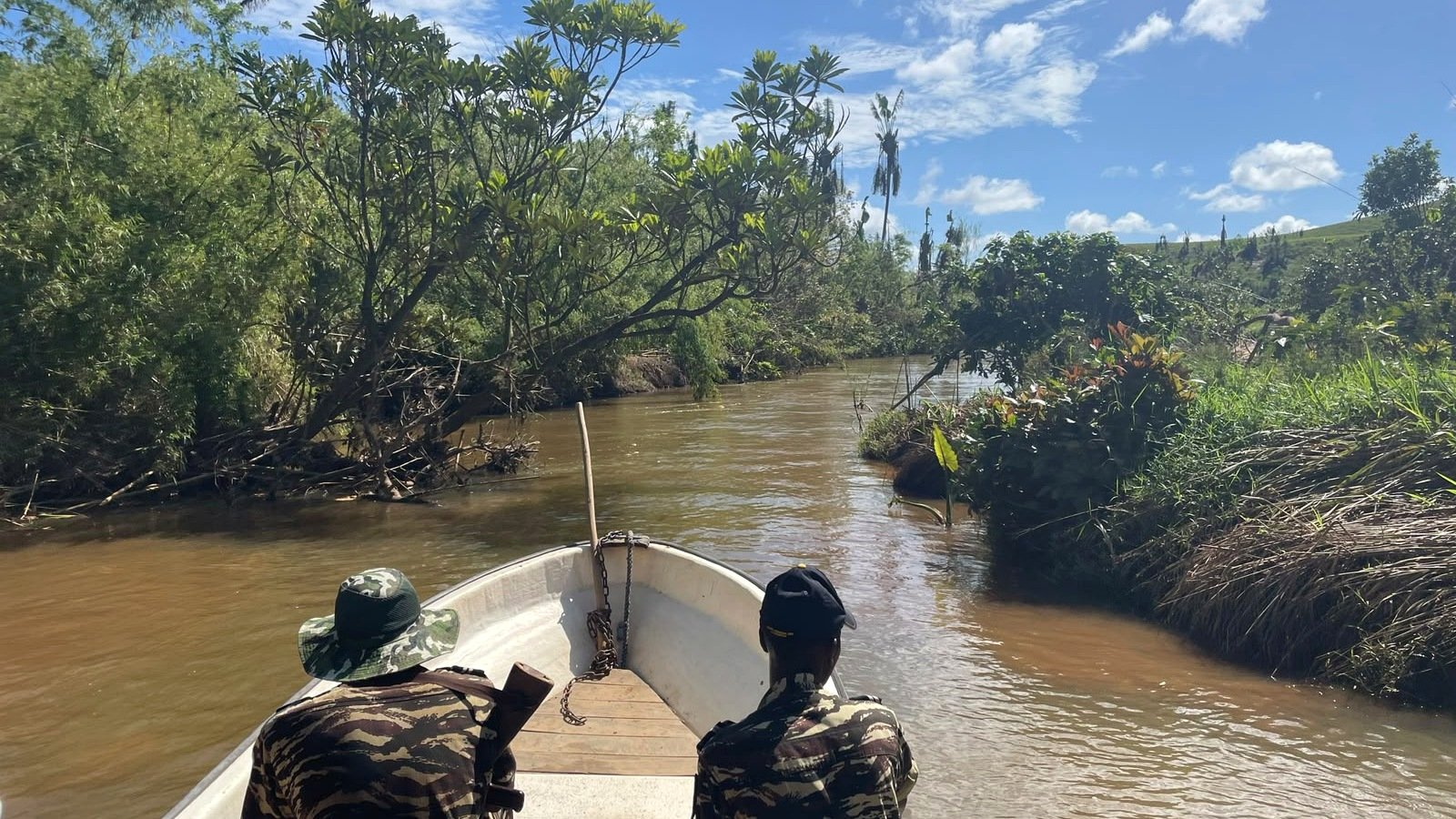
Geography created additional challenges. The remote mining environment included difficult terrain and river crossings, while advanced medical support was geographically distant. The nearest local hospital could require approximately four hours of travel, while access to a more developed medical facility could require journeys of up to twelve hours.
Natural hazards were equally relevant. Tropical weather systems, flooding and cyclones could rapidly affect access routes, infrastructure, communications, personnel safety and the continuity of mining operations.
Within this environment, security could not be treated as a static guarding function. It had to operate as an integrated management capability linking physical security, personnel protection, mobility, Health & Safety, medical preparedness, crisis management and operational continuity.
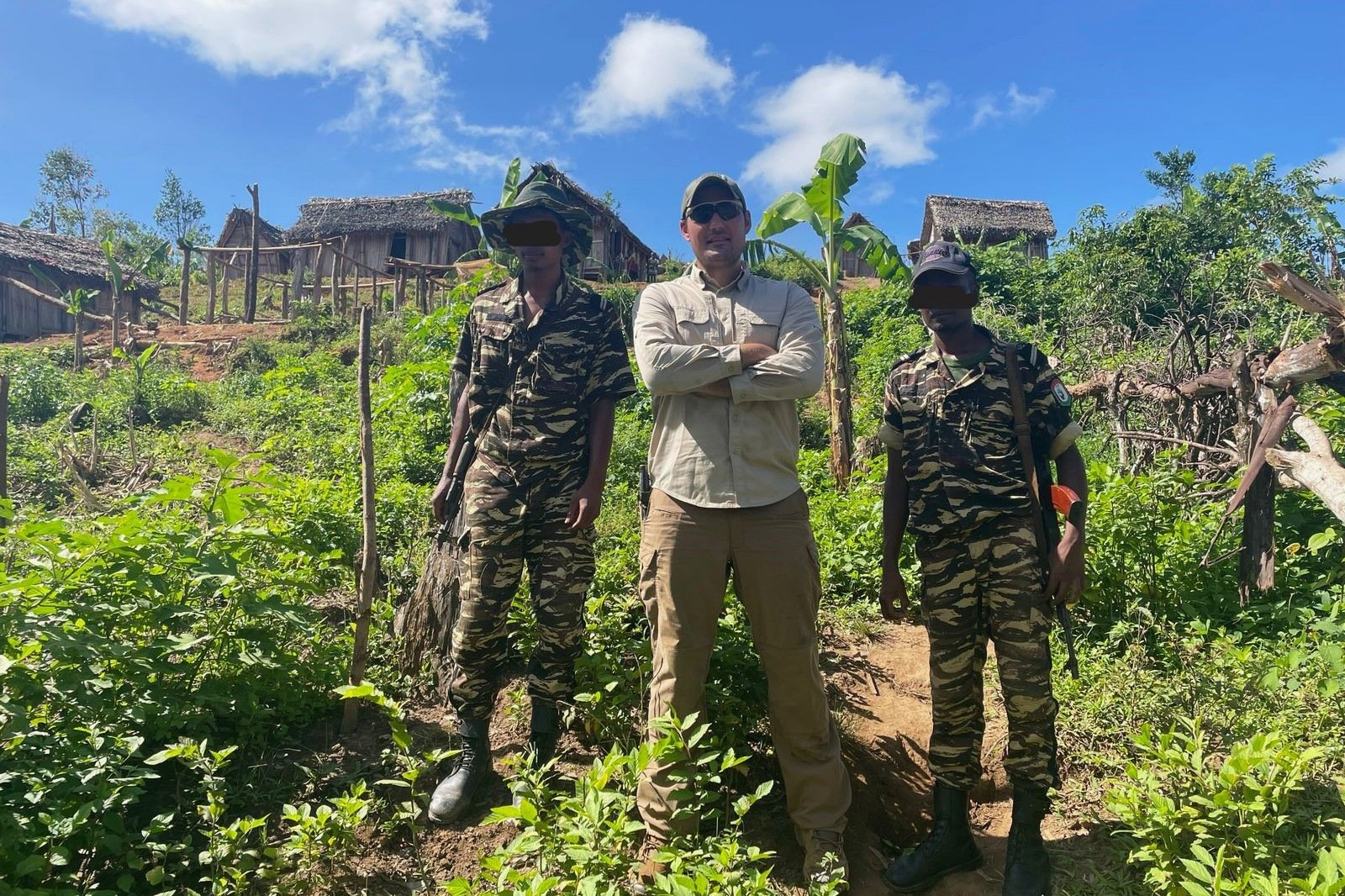
The principal challenge was to protect people, high-value assets and critical business activities across a geographically dispersed and operationally demanding environment while the organisation itself was still being developed.
The presence of gold, precious stones, metals and strategic mineral resources created an inherently attractive target for theft, diversion and criminal activity. Internal loss prevention was therefore as important as external protection.
During the four-year period, the security function regularly managed incidents involving attempted theft, pilferage and deliberate interference with company operations. These incidents required structured reporting, investigation, access control and continuous review of vulnerabilities and personnel-related risk.
The organisation also conducted movements involving cash, high-value materials, executives, shareholders and international visitors. Payroll operations were particularly sensitive because substantial payments to personnel were made in cash within the mining environment.
Certain movements were subjected to hostile attention. On two occasions, convoys associated with executive or high-value movements encountered attempted interference or harassment.
The wider criminal environment could also escalate beyond routine corporate-security concerns. During the period of operation, three incidents in the mining area involved armed confrontation with criminal actors.
Medical emergencies represented a significant operational risk because of the distances involved in accessing external healthcare. Environmental threats created another layer of complexity, with severe weather capable of isolating the operation and disrupting logistics, infrastructure and external support.
The security function was not inherited as a mature department. It was developed alongside the wider organisation from the earliest stages of the project.
As Director of Security & Crisis Management, Nikolaos E. Chatzovoulos reported directly to General Management and shareholders and maintained access to Board-level decision-making. This allowed security considerations to be incorporated into operational planning rather than addressed only after infrastructure and processes had already been established.
Over time, the function developed into an organisation of approximately 150 personnel responsible for protecting the company's people, facilities, movements and operational activities.
A structured guard-force model was established to support the different requirements of the mining and refining operations. The department was supported by a dedicated vehicle capability and progressively integrated security technologies including surveillance systems, thermal imaging, sensors and unmanned aerial systems.
Technology, however, was treated as one component of a wider security architecture rather than as a substitute for management and trained personnel.
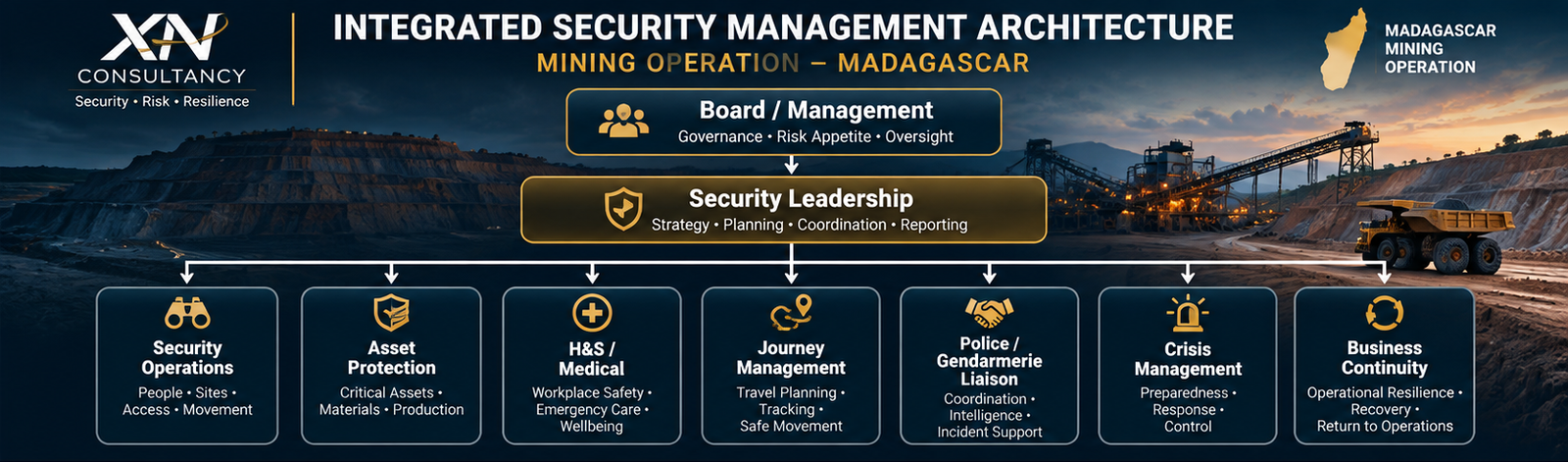
One of the defining characteristics of the security model was the integration of security management with Health & Safety and medical preparedness.
In a remote mining environment, personnel protection could not be separated from occupational safety, emergency response and access to medical care. The operation therefore maintained an on-site medical capability, including a clinic, nursing support and paramedical assistance.
The objective was to ensure that the organisation could stabilise and support personnel during medical emergencies while coordinating onward movement when required.
Security personnel, Health & Safety staff and medical support operated within a broader emergency-management framework rather than as isolated functions. A security incident could quickly become a medical emergency; an industrial accident could require access control and evacuation; and a severe weather event could simultaneously affect personnel safety, infrastructure, mobility, communications and medical access.
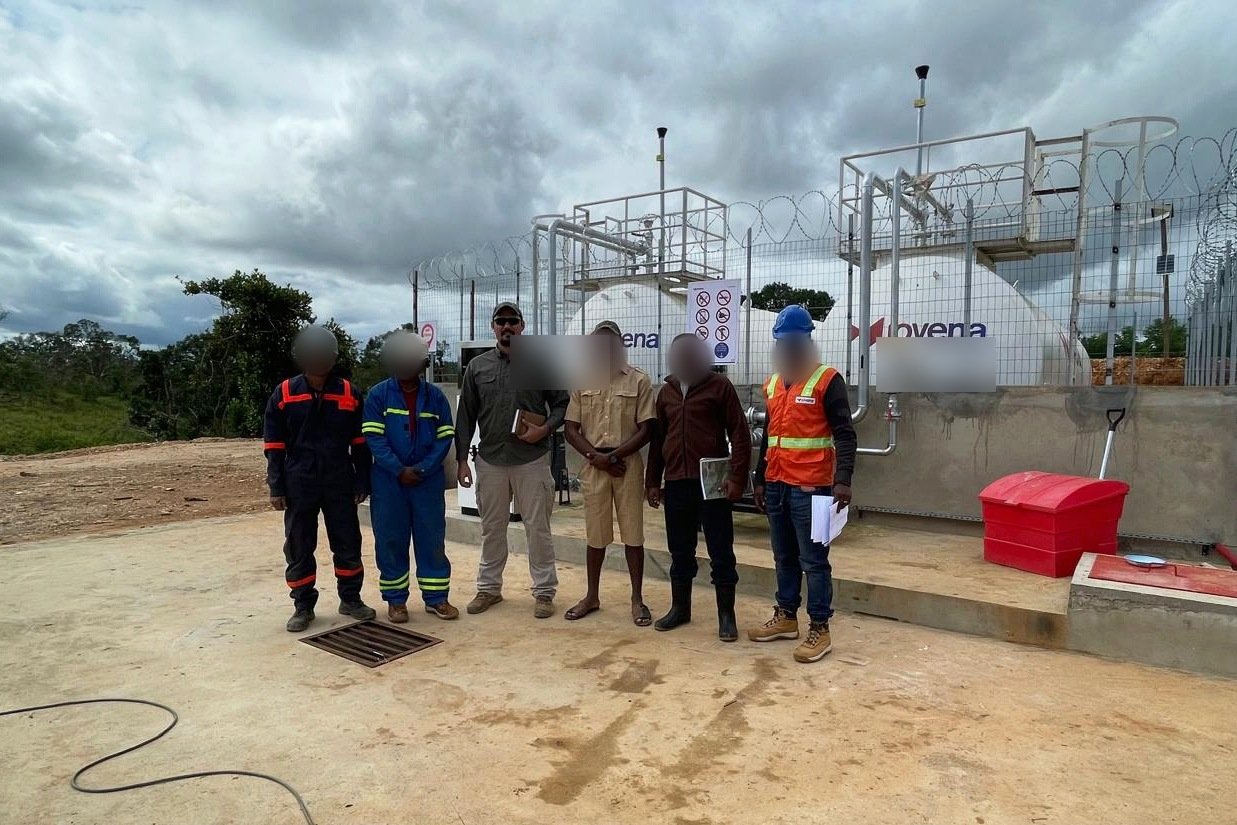
The security function also had to account for industrial infrastructure essential to continued mining activity, including a fuel station with storage capacity of approximately 30,000 litres.
Protection therefore extended beyond personnel and gold-related assets to include the infrastructure required to keep the operation functioning.
The organisation's activities involved the extraction, processing, transport, refining and commercial handling of gold, precious stones, metals and strategic mineral resources.
Security requirements therefore extended beyond conventional facility protection. High-value materials created risks associated with theft, diversion, unauthorised access, insider activity and criminal targeting.
The security function supported the protection of high-value operations across the full chain of activity, from remote mining areas through transportation and onward refining.
The gold-refining operation in Antananarivo represented a particularly sensitive part of the organisation's activities. As the operation matured, the refining capability subsequently undertook projects for the Central Bank of Madagascar.
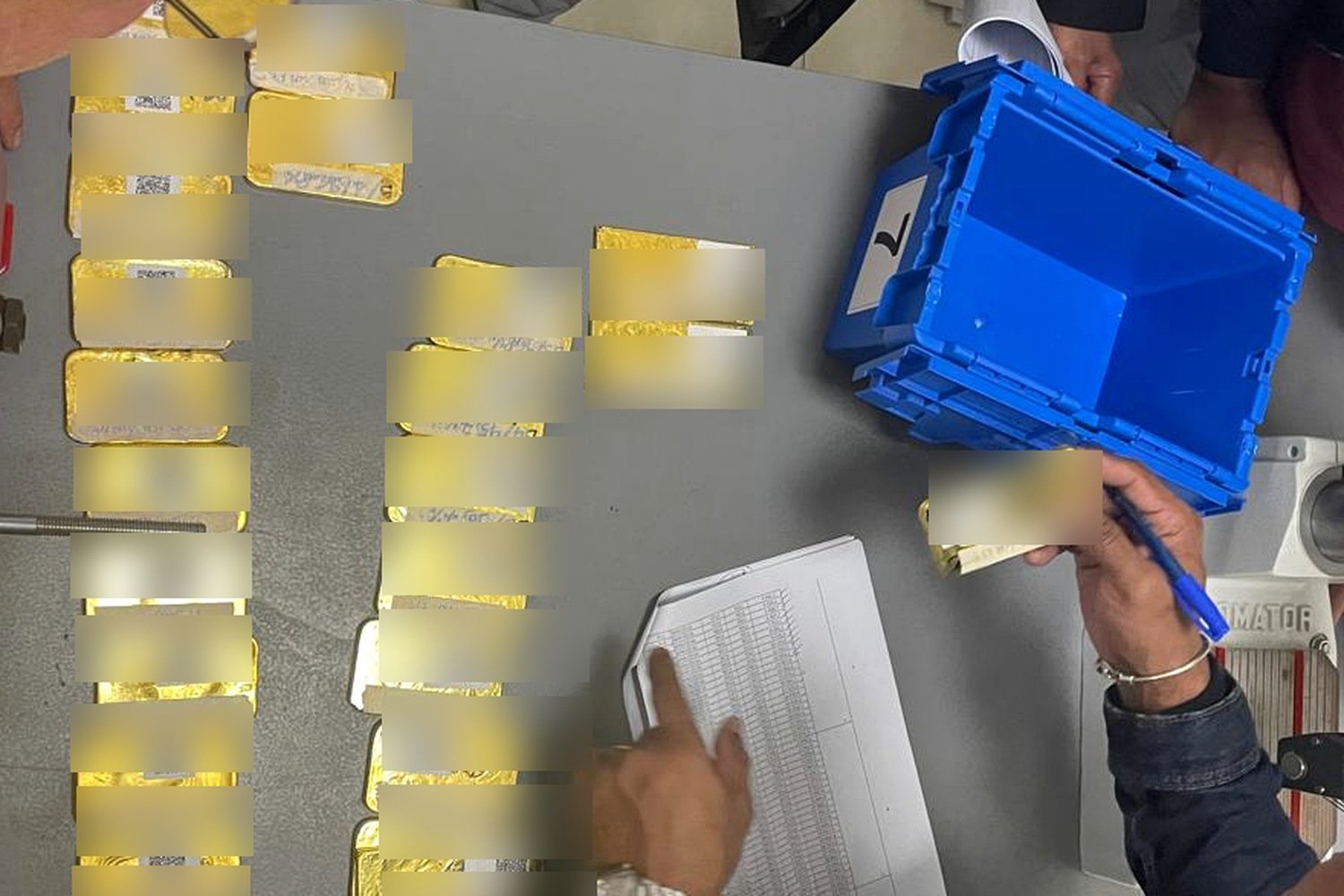
Cash operations created an additional area of exposure. Because personnel payments within the mining operation were conducted in cash, significant amounts of money had to be moved and managed in a remote environment.
Executive and shareholder movements formed another part of the security function's responsibility. International visitors, senior management and shareholders required secure reception, journey management and protective support while operating in Madagascar.
On two occasions, movements associated with executives or high-value assets encountered attempted interference or harassment. These incidents reinforced the importance of route planning, situational awareness, mobility, coordination and contingency procedures.
Operating a large mining project in a remote region required effective cooperation with public-security authorities.
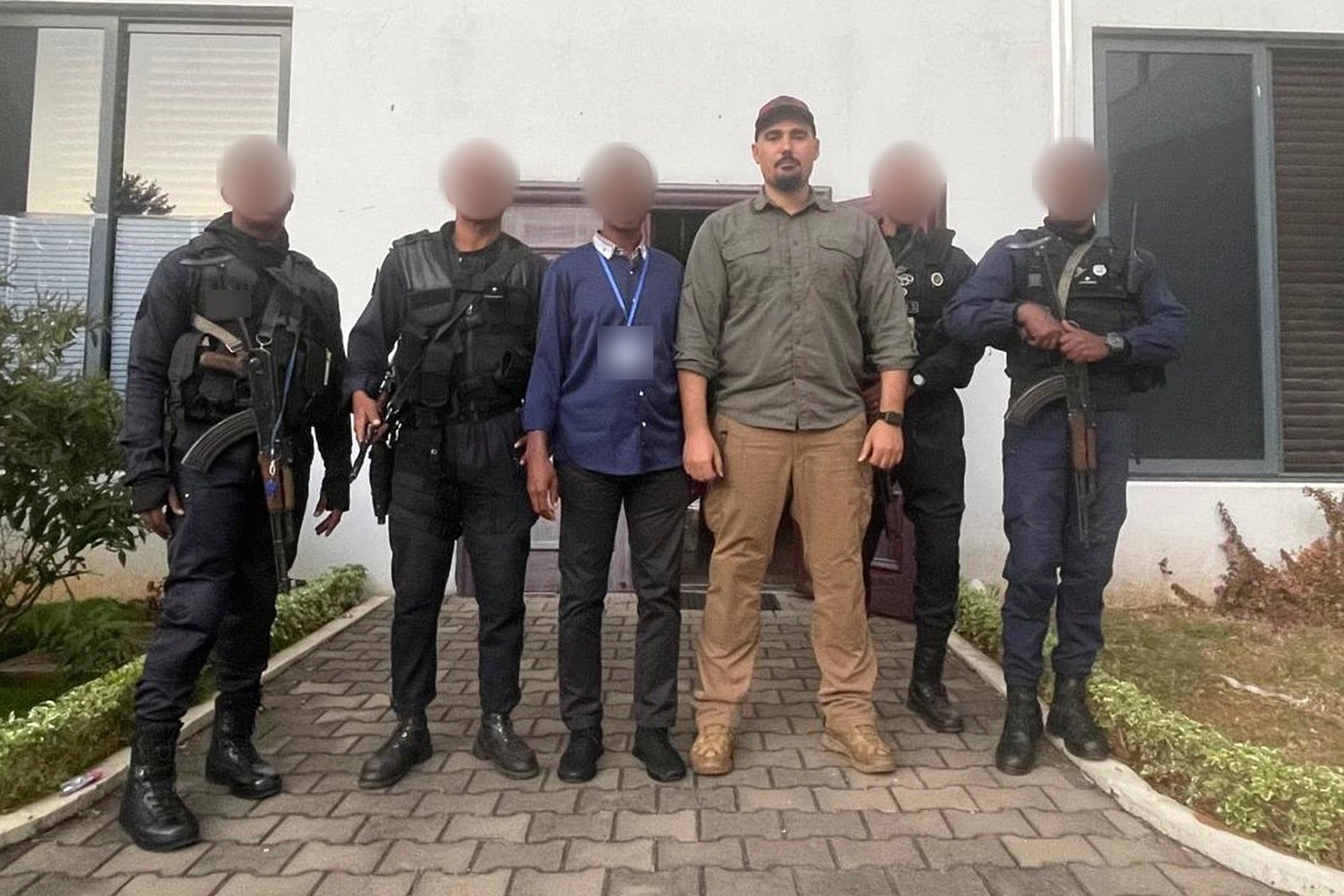
Formal arrangements were established with local Police and Gendarmerie, allowing their personnel to support the protection of the wider operating environment where required.
The relationship was based on coordination rather than substitution. Corporate security retained responsibility for the organisation's internal protection, procedures, personnel, assets and operational planning, while public authorities provided support in areas requiring official policing or law-enforcement capability.
Liaison mechanisms supported incident coordination, response to criminal activity, investigations, protection of personnel and facilities, sensitive movements and broader situational awareness.
Stakeholder management extended beyond formal security institutions. The presence of approximately 11,000 local residents in the wider operational environment meant that community interaction formed part of the security context.
The result was a layered liaison structure connecting corporate leadership, the security department, Health & Safety, medical support, local communities and public-security authorities.
Security leadership in Madagascar required preparation for events that extended far beyond conventional physical-security incidents.
The remote location of the mining operation meant that a serious event could rapidly develop into a broader organisational crisis. Criminal activity, medical emergencies, severe weather, infrastructure disruption and loss of mobility could all affect several business functions simultaneously.
Crisis-management planning therefore focused on maintaining the organisation's ability to protect personnel, preserve essential capabilities and continue operating under degraded conditions.
The nearest local hospital was approximately four hours from the mining operation, while access to a more developed medical facility could require travel of up to twelve hours.
Under those conditions, simply relying on external emergency medical services was not a viable risk-management strategy. The organisation therefore maintained an on-site medical capability incorporating a clinic, nursing support and paramedical assistance.
Security supported medical response through access management, communications, mobility and emergency coordination.
One of the most significant tests of the organisation's crisis-management system came with Cyclone Batsirai in February 2022.
The cyclone struck the Mananjary region with severe winds, flooding and widespread infrastructure damage. For the mining operation, the threat extended well beyond physical damage to buildings or equipment.
The organisation had to consider simultaneously the safety and accountability of personnel, continuity of medical capability, access to essential supplies, communications, security of facilities and high-value assets, fuel availability, transport routes, isolation risk and the ability to restore business activity after the immediate emergency.
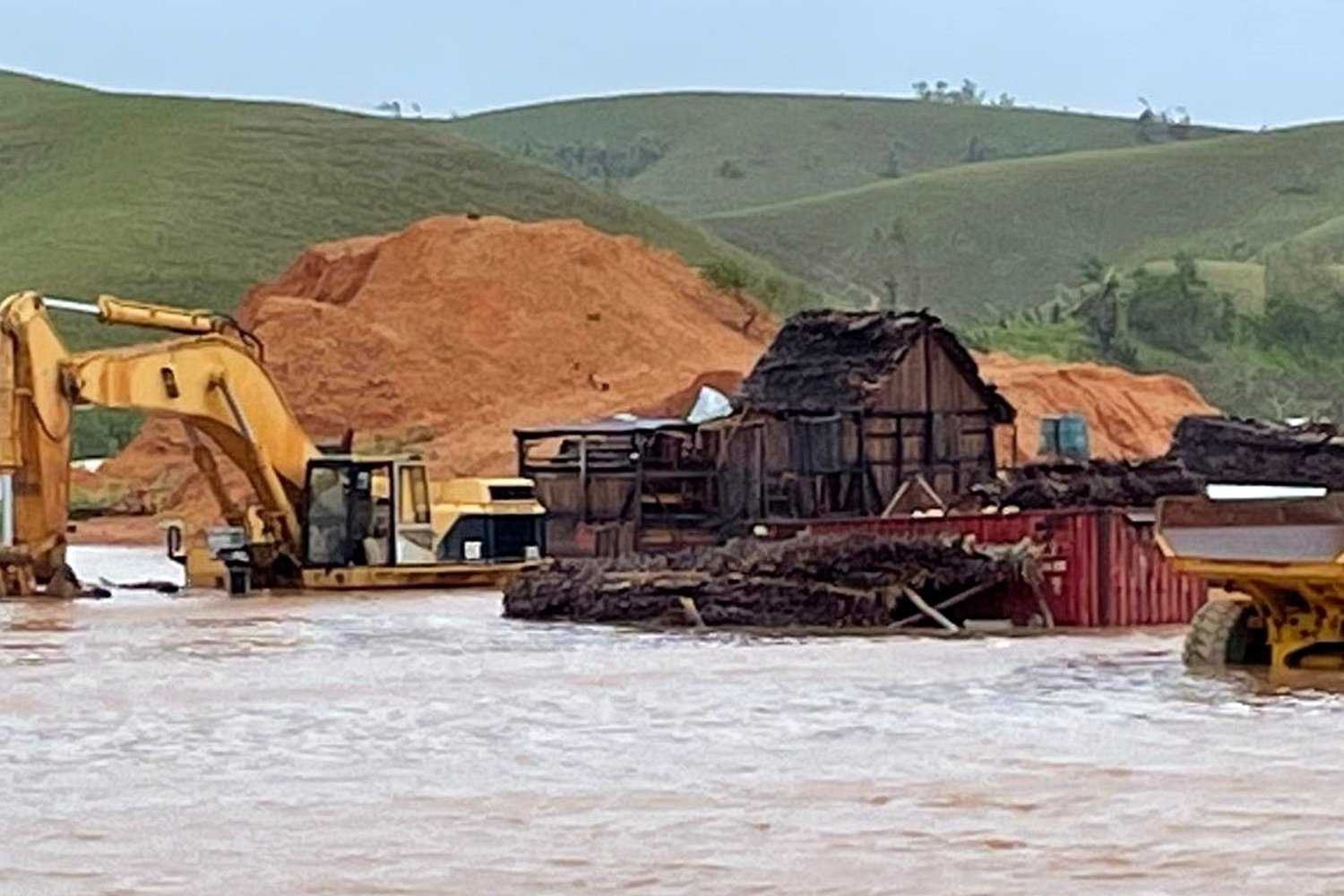
Personnel protection remained the immediate priority. Despite the severity of the cyclone and the destruction experienced across the surrounding region, the organisation recorded no loss of life among its personnel.
Once the immediate threat had passed, attention shifted from emergency response to recovery. Security, Health & Safety, medical support and operational management worked within the established crisis framework to assess conditions, maintain essential protective measures and support the restoration of normal activity.
The organisation was subsequently able to return to operational activity rapidly despite the disruption affecting the wider Mananjary region.
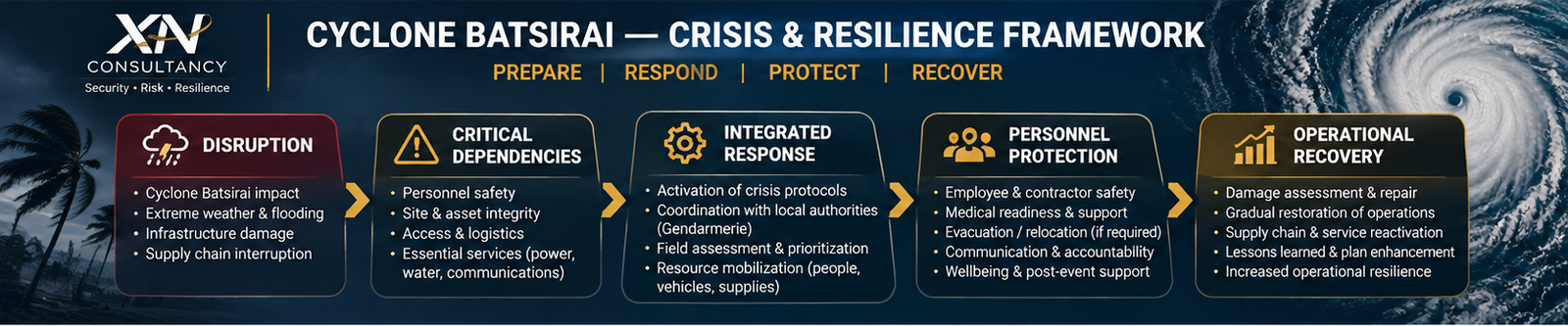
Cyclone Batsirai reinforced the distinction between security response and organisational resilience.
A conventional security department may be designed to prevent theft, control access or respond to criminal incidents. A mature security function must also understand what the organisation requires in order to continue functioning when normal assumptions no longer apply.
This included identifying dependencies such as people, communications, medical capability, mobility, fuel, infrastructure, external support and management decision-making.
The presence of approximately 30,000 litres of fuel-storage capacity, for example, was not simply an industrial or logistics consideration. Fuel availability supported vehicles, mobility, equipment and other functions required during disruption.
Similarly, medical preparedness was not solely a Health & Safety responsibility. In a crisis affecting access routes, external healthcare or communications, it became a business-continuity capability.
Security planning therefore increasingly focused on organisational dependencies rather than individual threats in isolation.
The scale of the workforce, the value of commodities handled and the complexity of mining operations created an ongoing requirement for internal loss-prevention measures.
Recurring incidents involving minor theft, attempted diversion of company property and deliberate interference with operational activity were managed through structured reporting, internal investigation, access-control measures, supervision and progressive improvement of procedures.
Two incidents during the operating period involved attempted interference or harassment affecting convoy movements associated with executives or high-value activity. Both situations were resolved without compromising the protected personnel or assets.
During the four-year period, three incidents in the mining area involved armed confrontation with criminal actors. These situations required disciplined incident management, coordination between security personnel and relevant public-security authorities, and careful protection of personnel and operational areas.
The role of security leadership in such circumstances was not simply to respond tactically to an immediate event, but to ensure that command structures, escalation mechanisms, communications, external relationships and decision-making processes already existed before a serious event occurred.
With external healthcare located several hours away, the on-site clinic, nursing capability and paramedical support became critical components of personnel protection. Security supported medical response by maintaining access, mobility, communications and coordination.
Security is most effective when it participates in organisational decision-making rather than operating as a downstream service. Direct access to senior leadership allowed security considerations to be incorporated into facilities, procedures and operations from the earliest stages.
Thermal imaging, surveillance systems, sensors and unmanned aerial systems increased situational awareness, but were effective only when supported by trained personnel, clear procedures, command structures and disciplined reporting.
High-value operations attract external threats, but persistent security challenges can also arise from within an organisation. Reporting, investigations, supervision and organisational culture remain essential elements of asset protection.
Effective liaison cannot be created for the first time during a major incident. Relationships, responsibilities and communication mechanisms should be established before they are required.
Where advanced healthcare is several hours away, medical preparedness becomes a strategic requirement that strengthens life safety, emergency management and continuity.
Personnel, communications, fuel, mobility, medical capability, infrastructure and management decision-making are interconnected. Loss of one capability can quickly affect several others.
The objective of security is not to create restrictions around the business. Properly integrated security enables movement, protects assets, supports executive activity, facilitates engagement with authorities, assists emergency response and contributes to continuity.
Development and management of a large security function with direct engagement at senior-management and shareholder level.
Creation of organisational structures, responsibilities, policies and operational processes from the earliest stages of the project.
Protection of mining facilities, refining operations, industrial infrastructure and high-value commodities.
Leadership and coordination of a security organisation of approximately 150 personnel.
Operational integration of surveillance, thermal imaging, sensors and unmanned aerial systems within a wider security framework.
Protective support for shareholders, senior executives and international visitors operating in Madagascar.
Planning and coordination of personnel and high-value movements across complex and remote environments.
Structured response to theft, misconduct, sabotage, criminal activity and other security incidents.
Development of formal relationships and coordination mechanisms with public-security authorities.
Coordination of security requirements with occupational safety, emergency-management and medical functions.
Preparation and response to serious criminal, environmental and operational incidents.
Protection of essential capabilities and support for recovery following major disruption.
This case study describes professional security and crisis-management experience gained in Madagascar between 2021 and 2024.
The leadership principles, security methodologies and crisis-management practices developed during this period continue to inform the approach applied to complex security environments.
Certain identifying, technical and operational details have intentionally been omitted. The case study does not disclose security layouts, protective configurations, transportation routes, response procedures, communications arrangements, detailed vulnerabilities or other information that could compromise the security of personnel, facilities or operations.
The purpose is not to disclose how individual security measures were implemented. It is to demonstrate how an integrated security function can be designed, developed and led within a complex, remote and high-value operating environment.
The Madagascar experience demonstrated that security leadership in a complex operating environment extends far beyond guards, barriers and surveillance systems.
It requires an understanding of people, operations, infrastructure, logistics, medical capability, public authorities, environmental threats and organisational dependencies.
Over four years, a security requirement that began alongside a developing mining project evolved into an integrated capability supporting approximately 1,000 personnel, high-value mining and refining operations, executive movements, institutional projects and crisis response.
The most important outcome was not the absence of individual incidents. Incidents occurred, risks evolved and the operating environment repeatedly tested the organisation.
The defining achievement was the development of a system capable of identifying risk, responding to disruption, protecting personnel and assets, and supporting the organisation's ability to continue operating.
The operational principles demonstrated in this case are directly relevant to security risk management, crisis planning, executive protection, secure transportation and complex operational support.
If your organisation requires security risk assessment, crisis-management planning, executive protection, secure transportation or integrated operational support, contact XN Consultancy to discuss the requirement.
Contact XN Consultancy